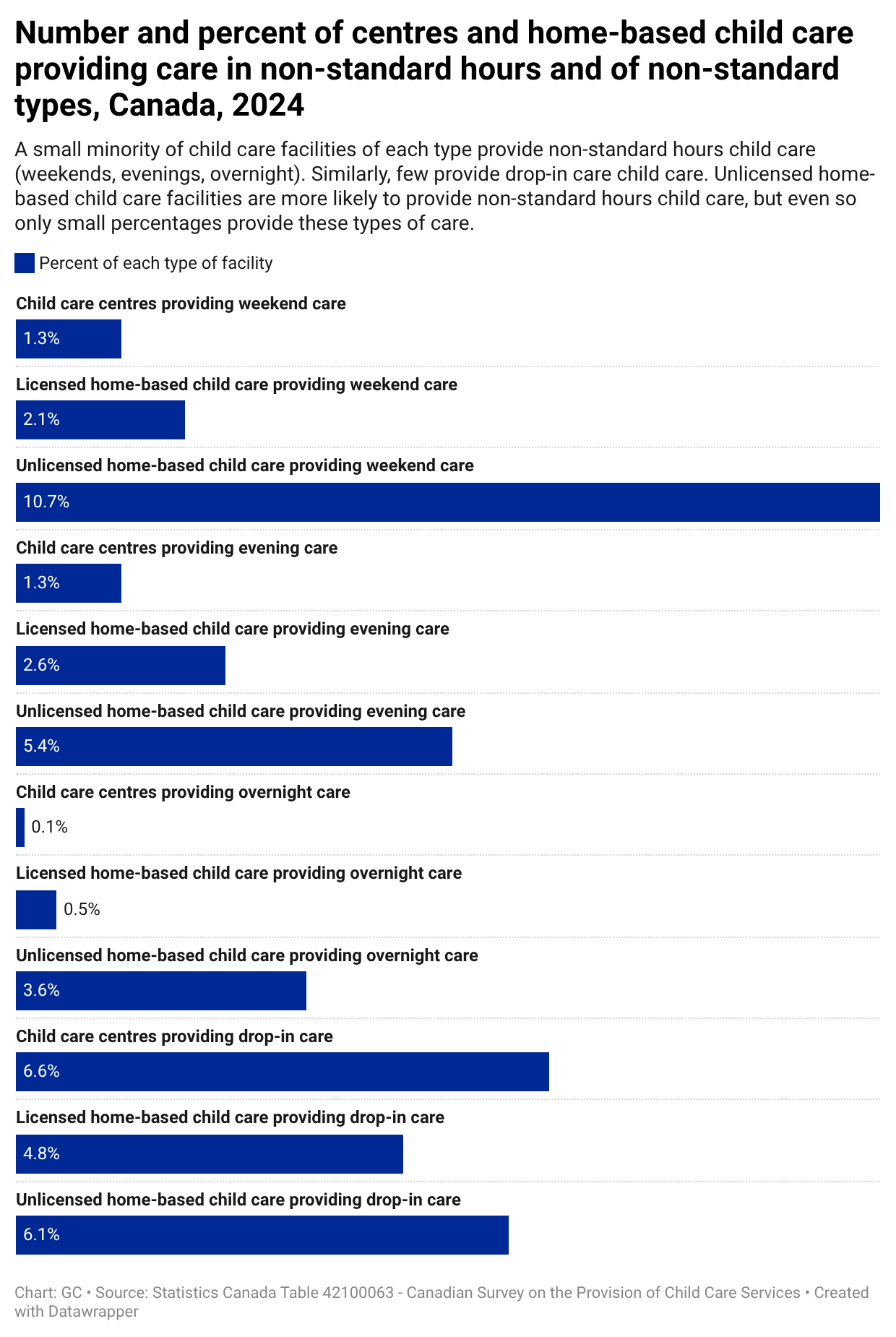
Early learning and child care is now recognized as a very significant part of the economy. It was before, of course, but now the recognized dollar value of production is very substantial. A recent Statistics Canada study put the value of ELCC services produced at $23 billion annually. That includes both child care and kindergarten – what they call the early learning and child care industry. The largest component of value comes from the child care side. The data is based on tax records and is current as of 2022. The chart below shows these estimates of the total value of output broken down by province and territory.
The rest of this blog post explores some important aspects of the supply of child care services, with data from the Canadian Survey on the Provision of Child Care Services (CSPCCS 2024). I’ve written before about problems with the sample used – it may well undercount centre-based child care services – but it provides a large amount of information not available elsewhere.
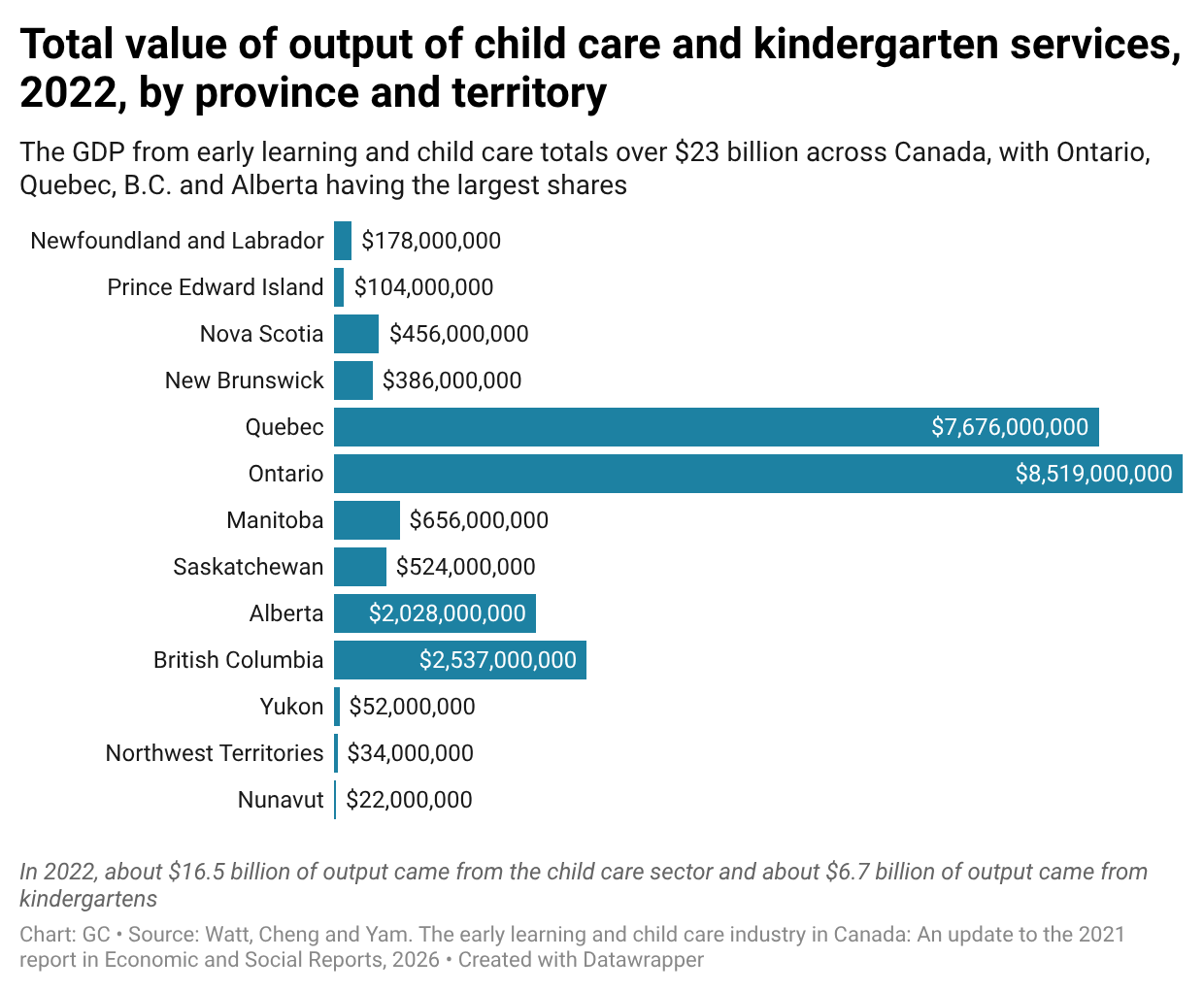
The survey tabulates the number of child care facilities that provide different types of service. And it does this for three categories of child care facility – child care centres, licensed/regulated home-based care, and unlicensed home-based care. If we count “facilities”, there are 17,800 licensed/regulated home child care providers, 14,663 unlicensed home child care providers, and only 14,523 centres. However, this provides a distorted picture of the child care sector.
In fact, as the report from Statistics Canada on the 2024 CSPCCS makes clear, 83% of the children in child care across Canada (0-12 years of age) are cared for in child care centres, 11% in licensed/regulated home-based child care and only 6% in unlicensed home-based care.
The chart below shows that all types of child care offer a range of different services. For instance, Statistics Canada reports that over 75% of Canada’s child care centres offer full-time child care, over half offer part-time child care and about half offer before school and/or after school child care.
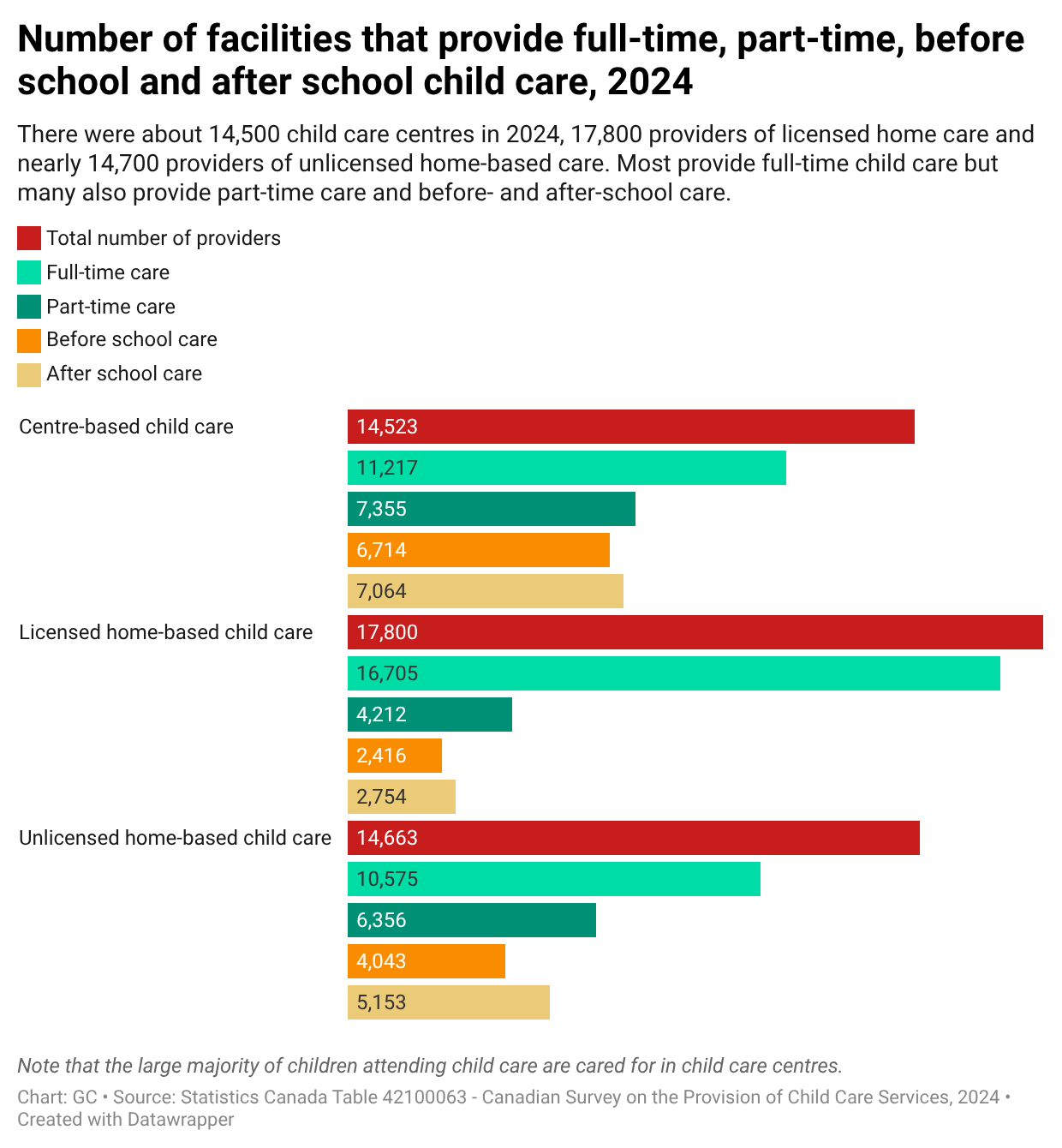
The chart below shows the number and percent of facilities of each type that have accommodations or supports in place to serve children with long-term conditions or disabilities. This is true of 75% of child care centres, but only 33% of licensed/regulated home-based child care and only 15% of unlicensed home-based child care.
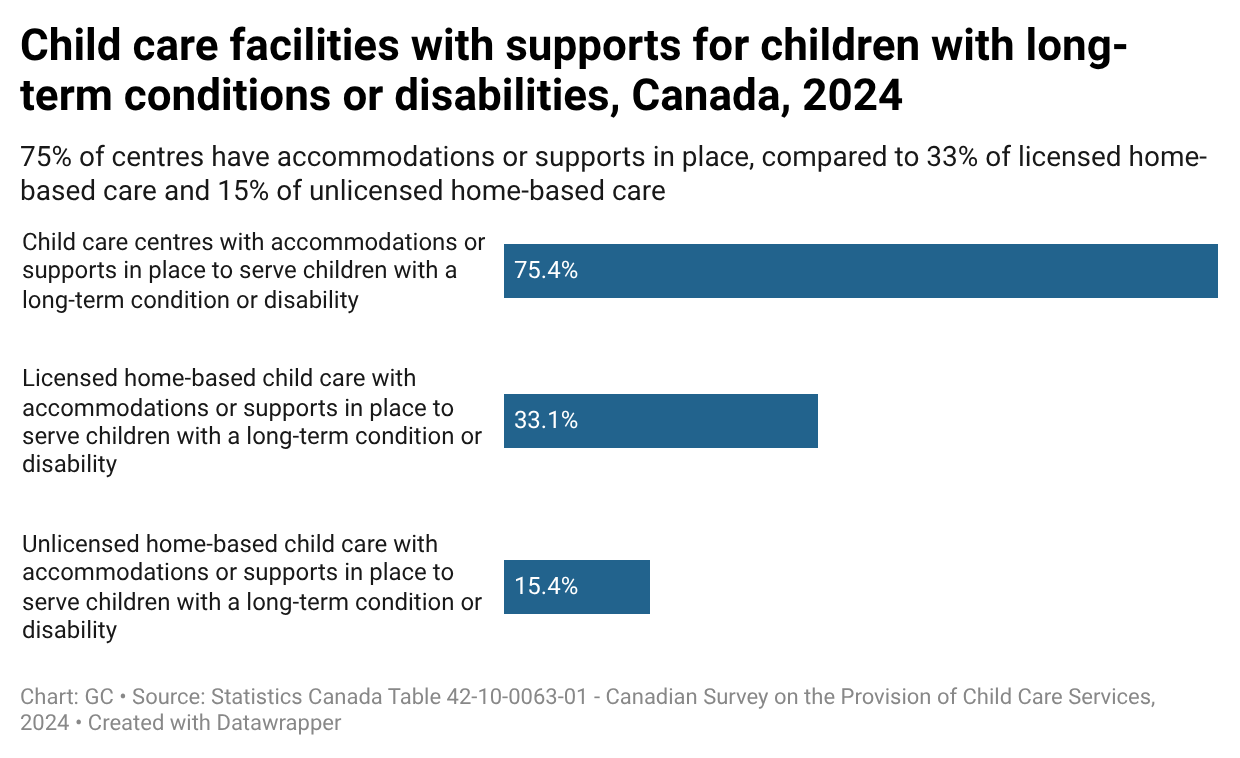
Another important aspect of child care services is the hours of service available. The chart below shows that not many child care facilities of any type offer non-standard-hours child care whether this be evening, weekend or overnight care. Since governments have been promising that child care would be “flexible”, some see this as a big problem.
It IS a problem, but it is easy to overstate the size of the problem. Statistics Canada’s Canadian Survey on Early Learning and Child Care from 2023 asked parents during what hours they would like to use child care. There are over 1.2 million children 0-5 years of age who are using some form of non-parental child care, but only 2% said they would like to use late evening care and only 1% would like to use overnight child care. There were larger percentages wanting to use weekend care (6%) or care in the early evening or early morning (about 5% each). These are not cumulative totals – the same family might want weekend care AND early evening child care.
A similar question was asked of parents not currently using any non-parental child care. Over 25% of them would be willing to use child care if they could find what they need and want for their child, but of these families 84% said they wanted child care during standard weekday hours.