
What are the priorities as we build early learning and child care in Canada? There is much we can learn from Québec. This blog looks at two priority lessons:
1. Child care capacity must increase rapidly to bring about its economic benefits, and
2. Reliance on for-profit child care weakens the ability to provide quality care for children
Back in the late 1990s, Québec, without federal help, invested heavily in expanding affordable child care services. In 1998, the government of Québec published a 9 year development plan (up to 2005-6) to add 92,500 additional child care spaces. Capital funding and development supports were made available to nonprofit groups for purchases of land, construction or renovation costs, professional services, startup and for the purchase of assets from existing licence holders. Capital money was also available for integrating management of family child care services into a CPE. Expansion was deliberately concentrated in non-profit centres (Centres de la Petite Enfance) and licensed family child care. With this dedicated focus on expansion, by 2005 there were enough child care spaces for over half of Québec’s children 0-4 years (up from less than one-fifth coverage in 1997).
See the chart below.
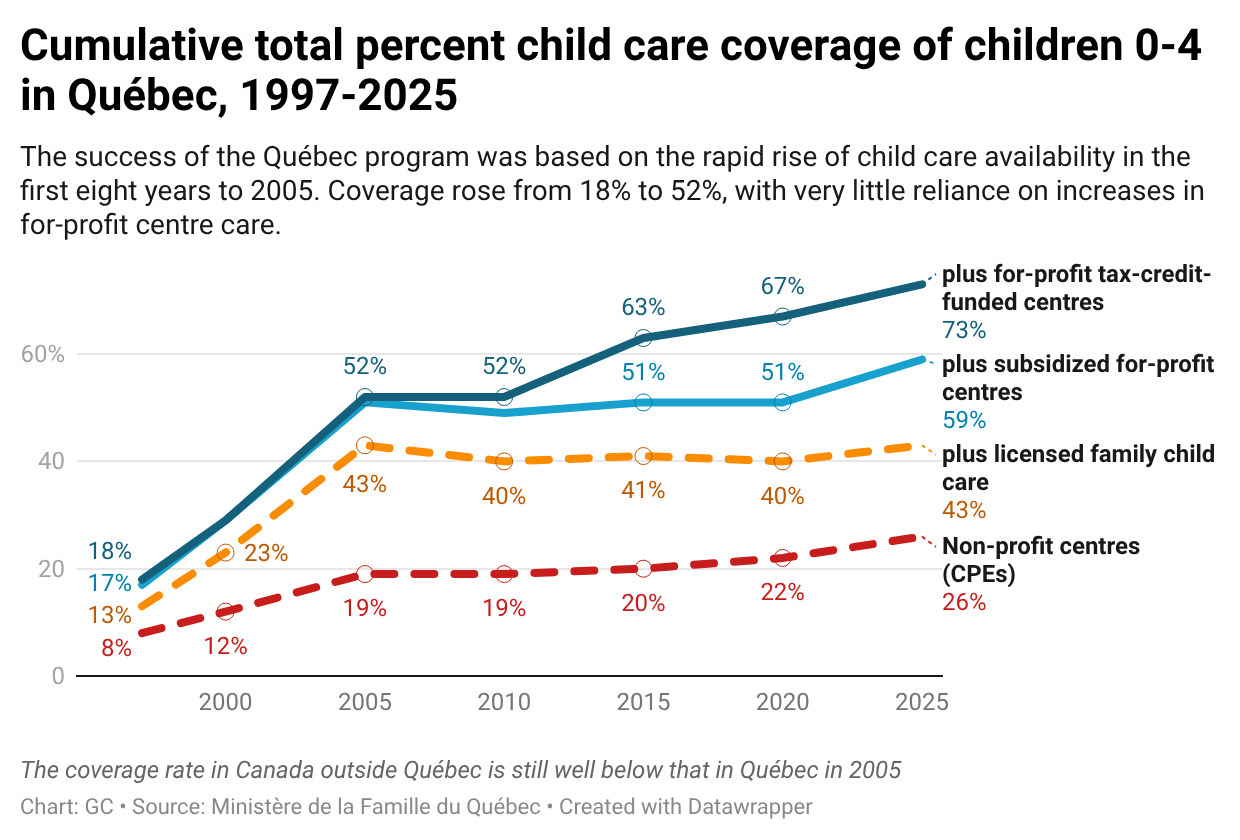
This rapid change launched forward the labour force participation of Québec mothers and established new supports for families. As Sébastien Montpetit and his colleagues have shown, the increased supply of child care was at least as important (perhaps more important) as its low price in stimulating mothers’ labour force participation.
The second lesson from Québec is equally pungent, but in the opposite direction. From about 2005 onwards (with a new more conservative Québec government), policy favoured the growth of for-profit child care services. Most of the expansion from 2005-2025 was in for-profit centre-based child care.
Québec sponsored a number of studies of child care quality in this period, all leading to the same conclusion as is summarized in the two charts below – for-profit centres tend to skimp on the hiring of qualified educators and provide child care that is unacceptable in quality. Québec’s Auditor General provided the information about staffing and quality summarized in the charts below.
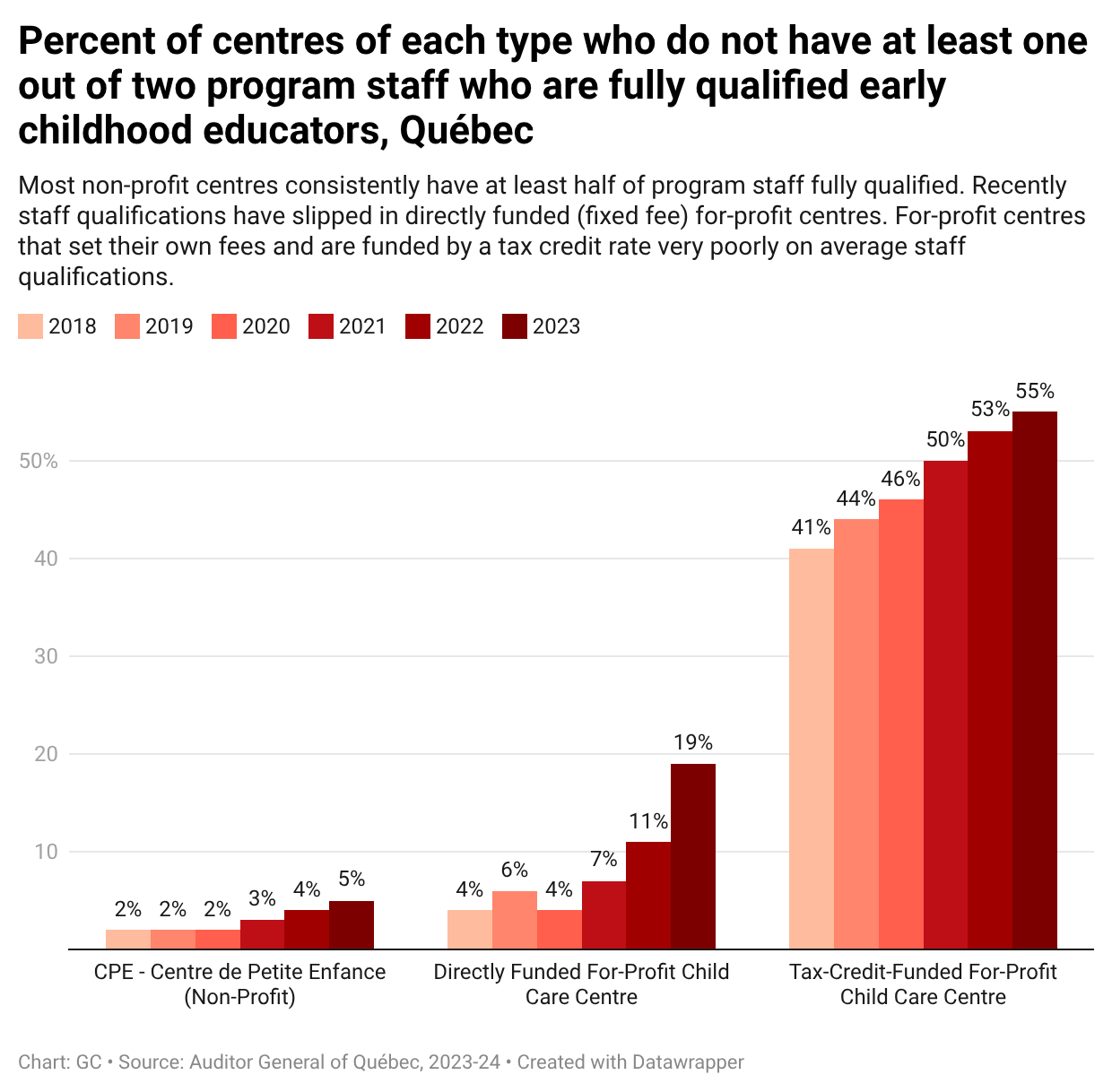
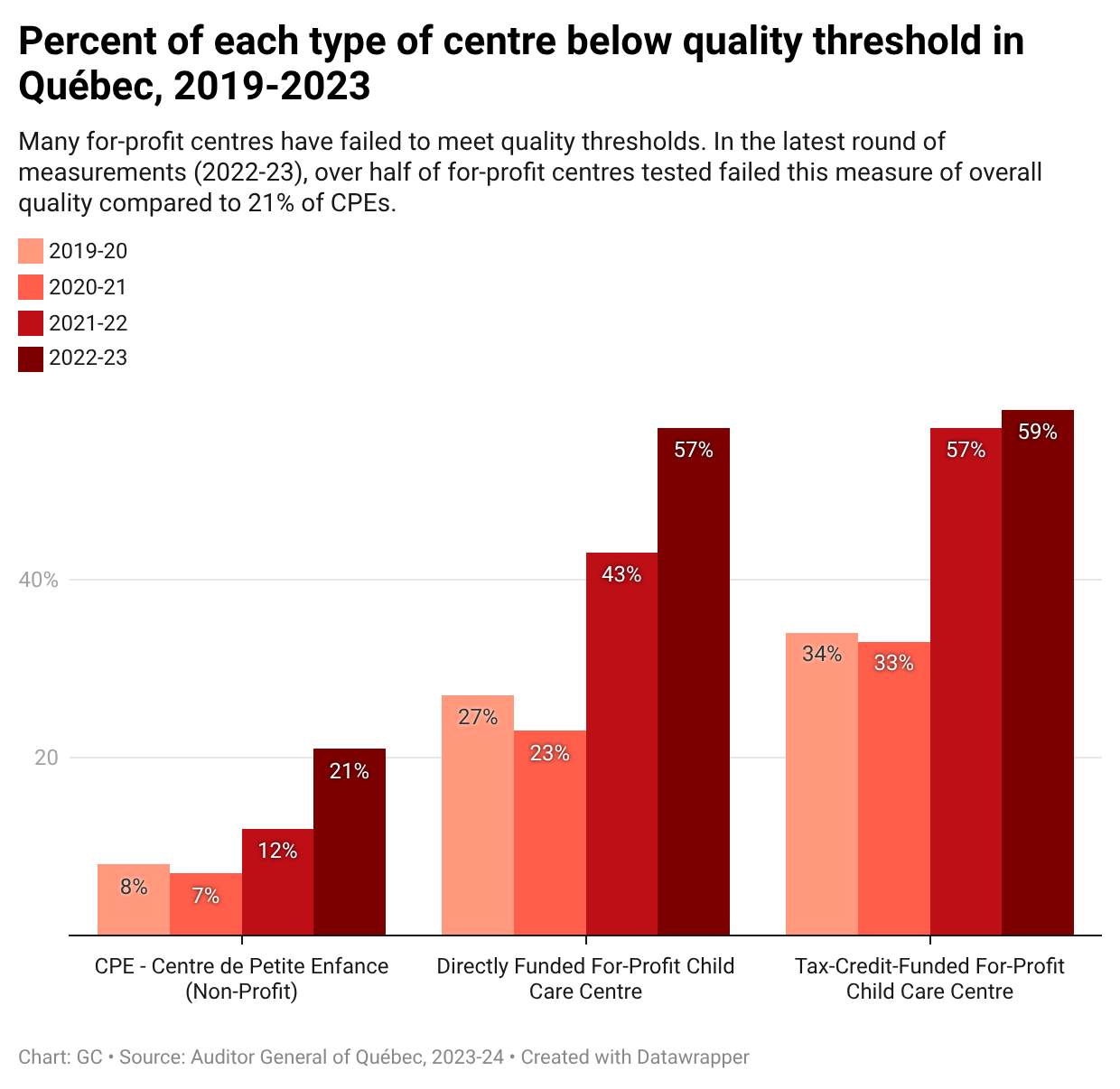
In the rest of Canada, we can emulate the successes (rapid expansion) and avoid the failings (too much reliance on for-profit care) of Québec child care, but it will take deliberate policy and dedicated resources to do so. The future successes of the CWELCC program – increased mothers’ employment and quality services for children – start now.